
A brief history and timeline
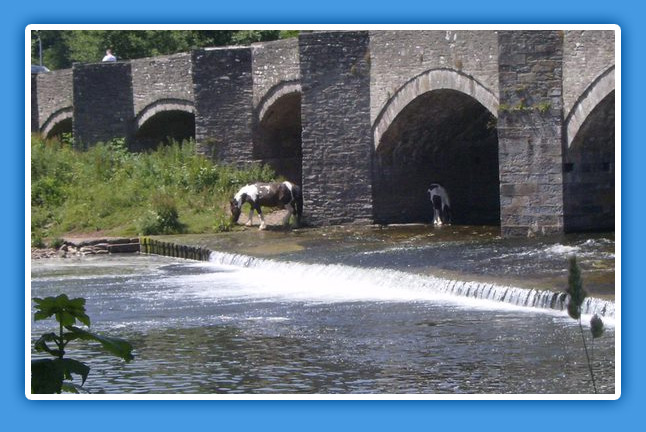
As we stroll down to the river, take a dip, wade across at a ford, or get into a boat, we are following in the footsteps of countless others who, for centuries, have taken the same path. Our landscape and our society shaped, and were shaped by, our paths, byways, and waterways. As we travel even the shortest of these routes, we connect with our history and our sense of place.
Historically, much as they do today, rivers, lakes and estuaries provided opportunities for transport, commerce, sustenance, and recreation. Public rights to use the waters have existed from time immemorial, and records show that in the past, as in modern times, they have been vital for healthy recreation.
The Romans recognised the importance of public access to water; part of the Roman legacy to Britain is the designation in law of the flowing waters of Wales and England, along with their banks, as `public things`.
Although there was a period of decline after the Romans left Britain, navigation was restored and public rights were enshrined in Magna Carta In modern times, public rights are challenged; and threatened by competing claims or development. The resultant conflict can inhibit people from enjoying outdoor recreation.
Contested rights of navigation
From about the mid-20th Century, challenges are recorded concerning the right of the public to be on the water without permission. We believe, as do many others, that a public right of navigation (prn) exists on all flowing water where it has not specifically been extinguished by statute. Some individuals are keen to point out that 'The Law' states there is no public right of navigation on water in England and Wales. In fact there is no statute, overriding or apparent, which supports this assertion.
In brief:
- There are acknowledgments of a Public Right to use water prior to 1750.
- There is no overall or encompassing statute which extinguishes pre-existing rights, merely an assumption by some that this has changed due to changing use of the waters of Wales, and England.
- If private rights have been allocated or sold since, these rights are held subject to the public right. Whilst fishing rights were originally granted for sustenance they are now more commonly used for 'sporting' purposes.
The law relating to public use of inland water in Wales, with the exception of sporting rights, is, for all parties, unclear while predicating its strategy to date on one, untested, interpretation.
For example, when Welsh Government supported a restrictive arrangement on the Upper Wye. Environment Agency stated in 2005:
Our support and instigation of access agreements on rivers where rights to navigate may or may not exist does not constitute a comment on whether such rights exist or not. Such agreements are a pragmatic approach to securing recreational opportunities for the public. It is not currently our policy to seek to investigate any such rights on the Upper Wye.
Of course it is open to individuals or organisations to assert a right they believe they have, and were any such rights to be challenged to seek their confirmation via a legal process. Were any rights to navigate on the Upper Wye be confirmed by the courts, we would of course give due regard to any such judgement.
This puts the onus on the public to prove their rights in court, even in the absence of evidence to the contrary. We do not consider this to be an appropriate or sustainable way for a nation to manage public rights in the 21st Century.
Contested rights of access to land
At various points in history, public access to land was reduced and restricted by the Enclosure Acts. With industrialization and urban development, recreation in open countryside became increasingly vital to the health and wellbeing of city dwelling industrial workers, but the limited access available was inadequate to meet needs of the public. A movement grew for public access, leading to the National Parks and the Countryside and Rights of Way (CRoW) Act. CRoW improved the situation but falls short of the full range and extent of access opportunities needed by today’s public.
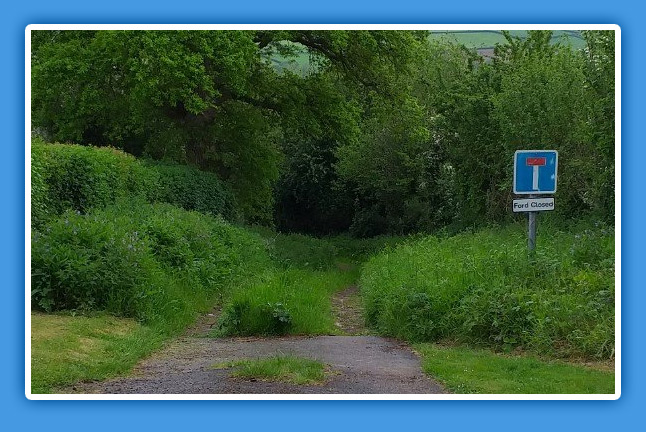
Many public rights of way (PRoW) lead to or alongside water; and are vital to enable public enjoyment of bluespace recreation. However, not all of these are recorded on the definitive map. Some have been ‘forgotten’ and may be blocked or closed. Others are in frequent, regular use so no-one would suspect that there may be a problem. However, under the Act, unrecorded public rights of way, including many that are still in regular use but not formally recorded, stand to be extinguished in England at the end of January 2031. In Wales, the position has yet to be formally determined.
Furthermore, the CRoW Act seeks to restrict opportunities for the public to exercise their right of navigation, by excluding access for the purpose of water-based recreation from designated CRoW access land.
For both navigation and access to land; differing views and understanding of the situation can give rise to conflict.
In order to ensure that all members of the public can enjoy the benefits of sustainable recreation in, on or beside water, Bluespace ACT works to identify, record, and protect public rights of access and navigation, for the benefit of future generations, and campaigns for the clarity needed for sustainable management of fair, shared, sustainable open access for the benefit of all members of the public, nature, and the environment.
For most nations throughout Europe, and almost everywhere else in the World, the public position has been clarified in law. Most recently, Scotland enshrined public rights with responsibilities by the Land Reform (Scotland) Act 2003, with an accompanying outdoor Code. Welsh Government has the ability to pass similar legislation for Wales, but, while acknowledging that legislation may be needed, and would work for Wales, it has shown considerable reluctance to act.
A more detailed time line of the campaign for land reform in Wales, leading to the growth of of the `Waters of Wales` community can be found below.
See the WOW timeline Read More
Timeline
A brief history of the Waters of Wales Campaign

Romans
The Romans recognised the importance of public access to water, and during the Roman occupation the Waters of Wales were designated as `public things`.
13th C.
Magna Carta Clause 33 enshrined freedom of navigation.
18th C.
Enclosure Acts Public access to the land was restricted over a period of time by these acts, but they did not affect public rights to navigate water e.g. boating or swimming.
19th C.
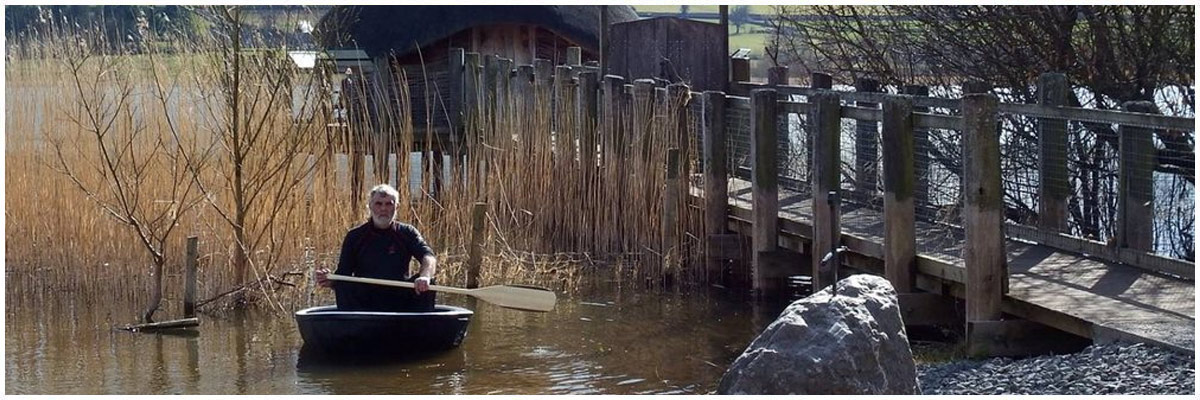
19th Century Traditional practices such as coracle fishing became subject to severe restriction, but shared use of rivers for transport, fishing and recreation is well-documented into the 20th Century.
1940's - 1950's.
The first recorded challenges to public use of water for informal recreation are from this period. Attempts to defuse conflict by negotiating restrictions to access led to the growth of a mistaken perception that permission was needed for use of water by the public.
1950's - 90's.
Various groups tried to negotiate access to and along inland water by voluntary agreement, but this proved impossible, as even if agreement could be reached between two parties, no one group could enter into an agreement on behalf of all members of the public.
2000
Countryside and Rights of Way Act (CRoW) passed by UK government, and currently applicable to Wales and England. Seeks to restrict opportunities for the public to exercise their right of navigation, by excluding access for the purpose of water-based recreation from designated CRoW access land.
2003
Land Reform (Scotland) Act. Access issues successfully addressed.
2008
A petition with 10,000 + signatures was delivered to the Welsh Assembly
The Welsh Assembly Government is urged to consider and implement a Bill to benefit Wales that would enshrine access rights and responsibilities for the public to and along natural resources in the same way that the Scottish Land Reform Act encourages co-operative use of the outdoors for healthy, low impact recreation.
This Bill must provide and permit access to and along non-tidal water in the face of the massive lack of legal clarity and restrictions that exist at present, which act as a barrier to sport and recreation and the promotion of Wales as a place to visit for adventure tourism.
2008
A public enquiry followed and led ultimately to the promise of a green paper by the end of 2013.

2009
Following a short inquiry, the Petitions Committee issued this Press Release:
Access to inland water in Wales is a right of equity and social justice. The current situation regarding rights to inland water in Wales is confusing, untenable and unworkable; there should be the same right of public access as there is in Scotland. according to the National Assembly for Wales’s Petitions Committee.
The rivers of Wales are a natural ‘gift’ that everyone should have the right to enjoy, said Committee Chair, Val Lloyd AM.
Access should not be based on the vagaries of permissions bestowed or ability to pay, but on the fundaments of equity and social justice.
We believe there should be the right of non-motorised access to inland water in Wales as there is in Scotland.
(Read the press release )

2010
Following their full enquiry, in spite of the Petitions Committee`s recommendations, the Sustainability Committee recommended
the setting up of voluntary access agreements by landowners
that SPLASH funding be targeted at these pilot projects; and that
the effects of the pilot projects should be closely monitored and the outcomes widely disseminated.
The full report can be found on this link:
(Read the report )
2011 - 12
A series of `Round-Table Discussions` took place, and projects funded by `SPLASH` were implemented.
2013
July - Welsh Government launched a review of legislation relating to access and outdoor recreation.
October - Welsh Government wrote:
The report of the National Assembly for Wales' Sustainability Committee on their Inquiry into Access to Inland Waters in Wales (2010) advocated that in the short term effort should focus on establishing voluntary agreements, but should the Assembly secure legislative competence in this area that introducing legislation to address areas where conflict persists would also be desirable. Three years on there continues to be conflict between different user groups and voluntary access agreements do not appear to be working Wales wide. The Minister now believes that it is necessary to explore ways of seeking to bring clarity and certainty for all on where they can go and what activities they can do, whilst ensuring proper safeguards for both nature conservation and the interests of owners. The Committee's findings are informing this current review.
December - In contradiction of the October statement, Welsh Government wrote: :
On water, there is a need to see an increase in the number of voluntary access agreements providing for a range of recreational activities. We will therefore publish a Green Paper on improving public access to land and seeking better facilitation of voluntary access to water. We do not plan to pursue primary legislation in this assembly term.
2014
By Welsh Government`s own account, the strategy of agreements funded by SPLASH has not delivered. The Green Paper promised for December 2013 has been considerably delayed. The future of SPLASH is now in doubt, but there is no indication of Welsh Government`s future intentions regarding public access to inland water. There is a danger that Access to Inland Water will disappear from the Welsh Government agenda.
2014
Formation of ‘Waters of Wales – WoW’ to take the campaign forward.
2015
WoW wrote to Welsh Government asking them to make a commitment to embark on the process to legislation; and received the reply that they will not do so in this assembly term. We then attempted to petition Welsh Government to divulge the legal advice they had received about the status of public rights of navigation, but they refused to accept the petition. The above clarified that we are looking to the new Welsh Assembly to be elected in 2016.
2016
The Campaign Continues!
WoW submitted a petition to the Welsh Assembly on 1st November 2016.
(Minister’s letter to the Petitions Committee )
(WoW response to the Minister’s letter )
We call on the National Assembly for Wales to urge the Welsh Government to implement a Bill to establish statutory public rights of access to land and water for recreational and other purposes. The bill should enshrine access rights and responsibilities for the public in the same way that the 2003 Land Reform (Scotland) Act encourages co-operative use of the outdoors for healthy, low impact recreation. This Bill must enshrine public rights of navigation for inland water, and permit access to and along water. It must remove the lack of legal clarity and restrictions which act as a barrier to sport and recreation and the promotion of Wales as a welcoming place for healthy recreation, tourism and adventurous activity at all levels of participation and enjoyment
The petition was briefly discussed at the Petitions Committee on 15th November. It was decided to hold the petition pending the promised Welsh Government announcement, by the end of January 2017.
2017
Campaign Moves forward!
January: In the face of continued inaction from the Welsh Government, WoW organised a profile-raising “Mass Paddle” on the River Dee in Llangollen on 8th January to raise the profile of our campaign, with Lowri Davies Champion Freestyle kayaker doing a great job of speaking out on our behalf.
February: A “Paddle to the Senedd and Quayside Rally” was held on 14th February, a day when the petition was on the agenda. The paddle was attended by over 100 paddlers, including members of the Canoe Wales Board, and was also endorsed by British Canoeing. Lowri Davies, Frances Bateman (GB Paralympic sprint champion) and GB Ice Swimmer Vicki Brice joined us for the event, and spoke to the assembled media. Pam Bell, spokesperson for Waters of Wales was interviewed live on Radio Wales, and we featured on BBC Wales Today and ITV Wales News. Several Assembly members met WoW members arriving at the Senedd and discussed our campaign. Steffan Lewis AM (South Wales East) who sponsored the event on our behalf, accepted papers supporting our case.
Cabinet Secretary for Environment and Rural Affairs, Lesley Griffiths published the following statement on the day.
Outdoor recreation makes a significant contribution to the economy and provides considerable health and social benefits. This is demonstrated by the huge success of the Wales Coast Path which has increased Wales’ profile at home and abroad. We now have the opportunity to build on this success. Wales needs an approach to public access for outdoor recreation that is less burdensome to administer, provides for a wide range of activities, but at the same time, respects the concerns of landowners. Whilst we can learn from other countries’ approaches, Wales requires laws which suit its cultural and physical landscape. We are very much aware of the concerns of landowners and the aspirations of access users. I will publish our proposals at the earliest opportunity so people can have their say, so we achieve a system that works in the best interest of all parties.
June: Launch of Welsh Government Consultation ‘Taking Forward Wales’ sustainable management of natural resources’
Chapter 4: Access to Outdoors: The current system underpinning access to countryside is too complex and burdensome. As such, Wales needs a better and fairer approach to public access for outdoor recreation, which is less burdensome to administer, provides for the wide range of activities people want to participate in and has sensible safeguards for land management activities. The Welsh Government intends to develop a coherent system for outdoor recreation, which allows for a broad range of non-motorised recreation on paths, open country and inland water.
June: Welsh Government wrote, in response to the consultation:
There were strong but differing views on how best to reform access legislation. We therefore believe that now is not the right time for substantive reform. But we are committed to exploring selected aspects of change where there was greater consensus, including on some of the administrative arrangements and multi-use paths. We will continue to facilitate further discussions through established groups such as the National Access Forum.
Waters of Wales – WoW Response
Waters of Wales – WoW has set out our views on the proposals, which can be used as an online response form or as a template to help people compose their own letter.
Our full response will be delivered shortly before the closing date of 30 September, and will be available on our website.
2018
August: The Petitions committee asked the Minister for further information about her intentions. In August 2018, the Minister replied:
Rural areas and interests are facing significant changes and uncertainty as a result of the UK’s decision to withdraw from the European Union. I do not intend to add further uncertainty and complexity to what may be a difficult transition for all concerned which is why I have said now is not the right time for substantive access reform. The consultation has been an extremely valuable exercise to inform the direction I want to take with regard to access, both through legislation and other means. I will provide further detail on the reform and the approach I believe is necessary when I formally respond to the consultation later this year.”
Link to the full response from Hannah Blythyn AM:
(Hannah Blythyn AM Response)
Waters of Wales – WoW Response to the Minister’s letter:
(WoW Response to the Minister’s letter)
In August 2018, the Minister replied:
(The Ministers reply.)
2019
The Petition was closed in June 2019. A statement from the Minister was tabled at the meeting and there was a comment:
Tell [WoW] to come back in 18 months if they are not happy with the outcome.
2020
WoW is monitoring the Welsh Government process and continues to advocate and campaign for fair, shared, sustainable open access to water, waterside, and the wider countryside, so that all members of the public can enjoy the health and wellbeing benefits of ‘bluespace’ recreation and a clean healthy environment.
2022
The 18 months mentioned by the petitions committee chair as the time for WoW to return if we were “not happy with the outcome” of Welsh Government’s plan for improving public access, has expired. WoW are most definitely not happy with the outcome, and will continue for campaign for fair, shared, sustainable open access to bluespace for ALL but do not consider that there would be any benefit in bringing another petition at this time.
2023
The campaign continues
2025
Launch of Waters of Wales updated manifesto The English language version of the manifesto.